👩🚒 Community Helper Lesson Ideas for Preschool
Teaching preschoolers about community helpers is a fun way to help them understand the people they see and interact with in their everyday lives.
From firefighters and police officers to doctors, teachers, construction workers, and mail carriers, a community helpers theme gives young children plenty of opportunities for pretend play, conversations, crafts, and hands-on learning.
If you’re planning a community helpers unit for preschool or kindergarten, these simple community helper lesson ideas will help you put together an engaging week of activities without making lesson planning complicated.
*By the way, this post may contain affiliate links which means I may receive a small commission at no additional cost to you if an item is purchase through that link. For more information, click here.*
🏘️ What Are Community Helpers?
Community helpers are people who work to help others and keep a community running.
For preschoolers, this can include familiar people such as:
- Firefighters
- Police officers
- Doctors
- Nurses
- Veterinarians
- Teachers
- Mail carriers
- Construction workers
- Farmers
- Dentists
- Chefs
- Garbage collectors
As you introduce each community helper, talk about what that person does, where they work, what tools they use, and how their job helps other people.
Keeping the explanations simple and connecting each job to things children already recognize makes the topic much easier for preschoolers to understand.
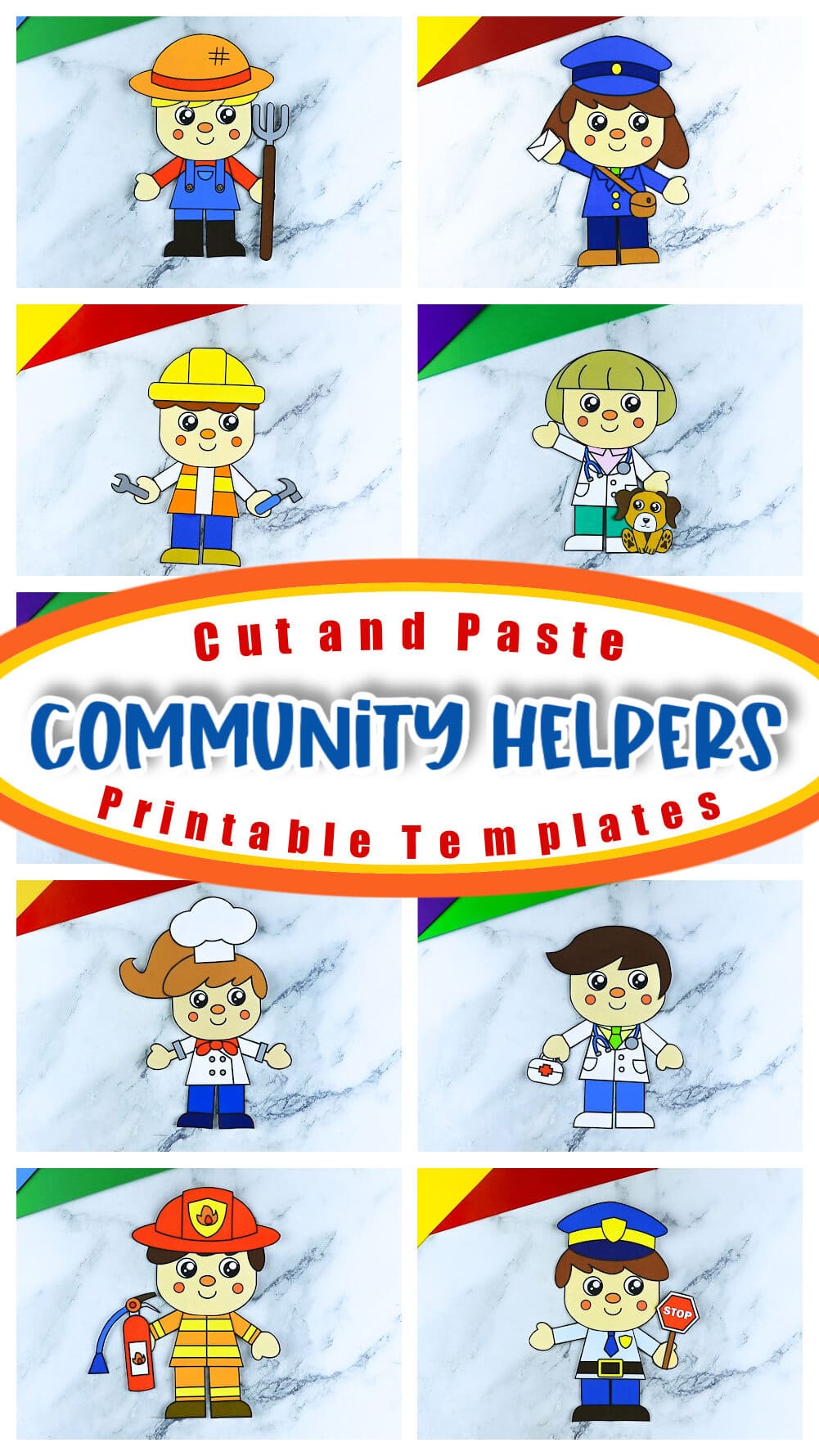
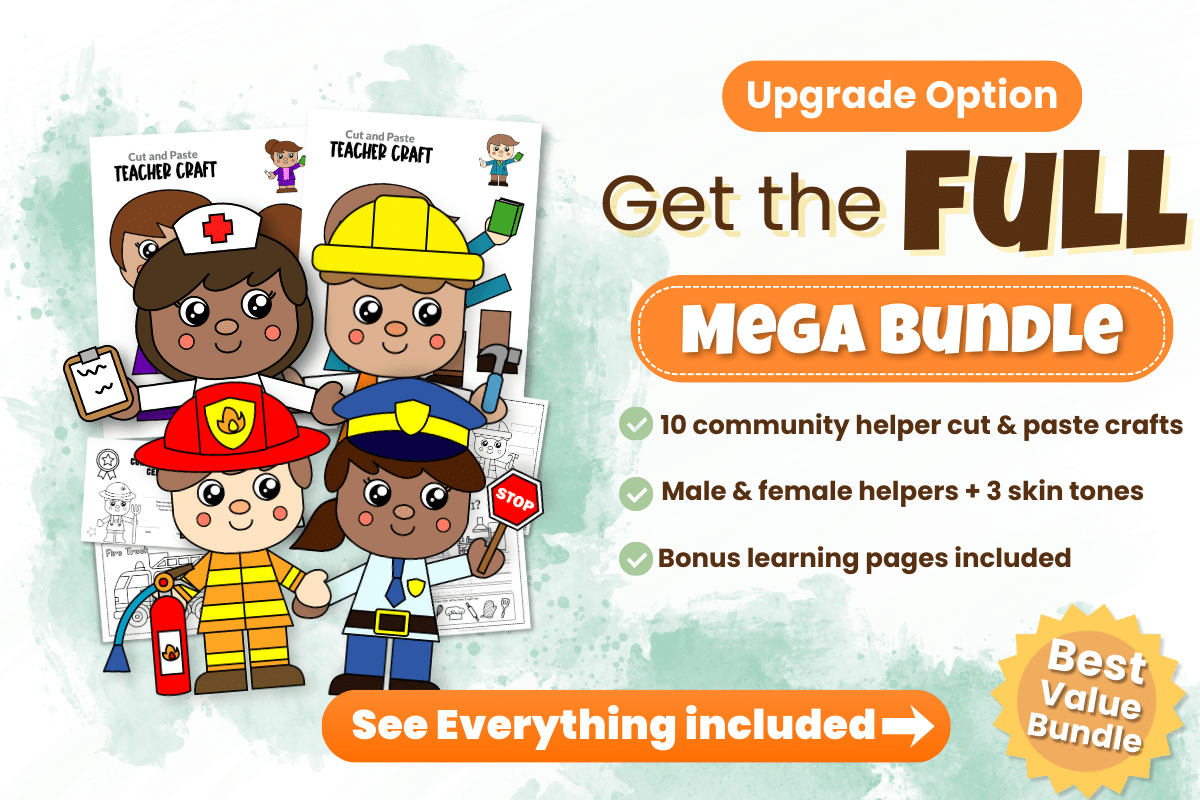
🧩 Want Ready-to-Go Community Helper Activities?
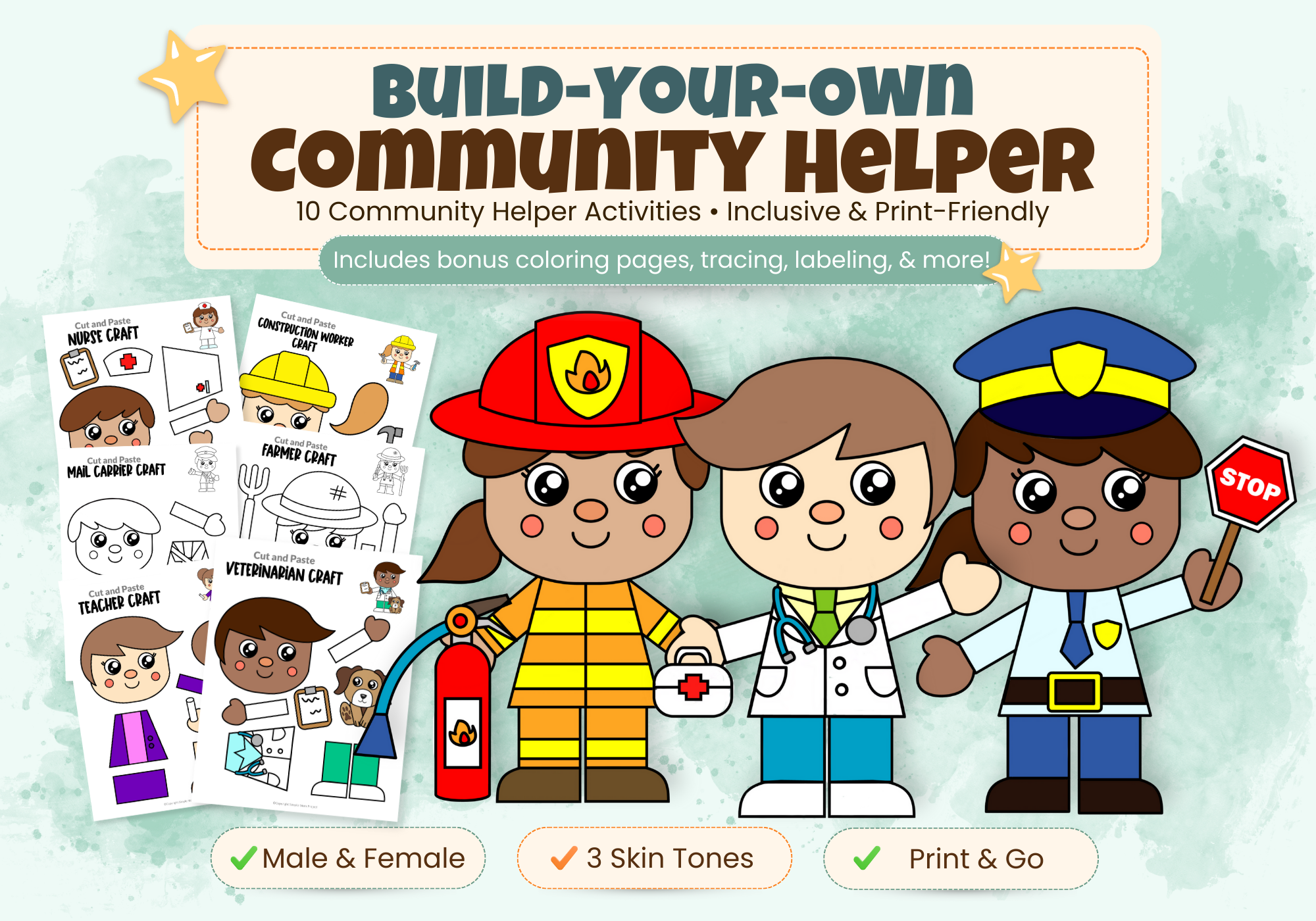
Make your community helpers unit even easier with our printable community helper activities!
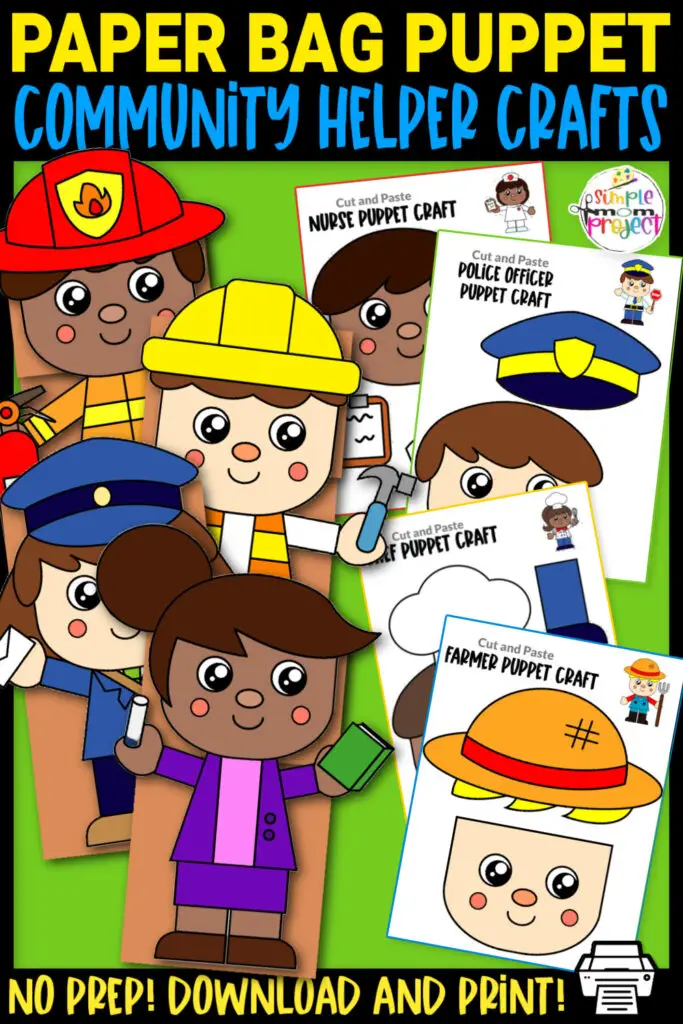
Use the templates, crafts, and puppets for classroom centers, bulletin boards, dramatic play, fine motor practice, or a complete community helpers theme.
Simply print the activities you need and you’re ready to start learning.
Community Helper Lesson Ideas for Preschool
You don’t need an elaborate lesson plan to make a community helpers theme exciting.
Try combining short discussions with crafts, books, pretend play, and simple learning activities throughout the week.
Here are some easy ideas to get started.
🚒 1. Learn About a New Community Helper Each Day
Choose one community helper to focus on each day.
For example:
Monday: Firefighter
Tuesday: Police Officer
Wednesday: Doctor or Nurse
Thursday: Construction Worker
Friday: Mail Carrier
Start each lesson by asking children what they already know about that helper.
Try questions like:
“What does a firefighter do?”
“Where does a doctor work?”
“What does a mail carrier bring to our house?”
“What tools does a construction worker use?”
These simple conversations encourage children to share what they know while introducing new vocabulary.
✂️ 2. Make Community Helper Crafts
Crafts are an easy way to turn your lesson into a hands-on activity.
Choose a community helper craft that matches the person you’re learning about that day.
Children can cut, glue, color, and assemble their community helper while you continue talking about the job.
Community helper crafts are also great for practicing:
- Fine motor skills
- Scissor skills
- Hand-eye coordination
- Following directions
- Shape recognition
- Creativity
Display the finished crafts around your classroom to create a community helpers bulletin board or classroom display.
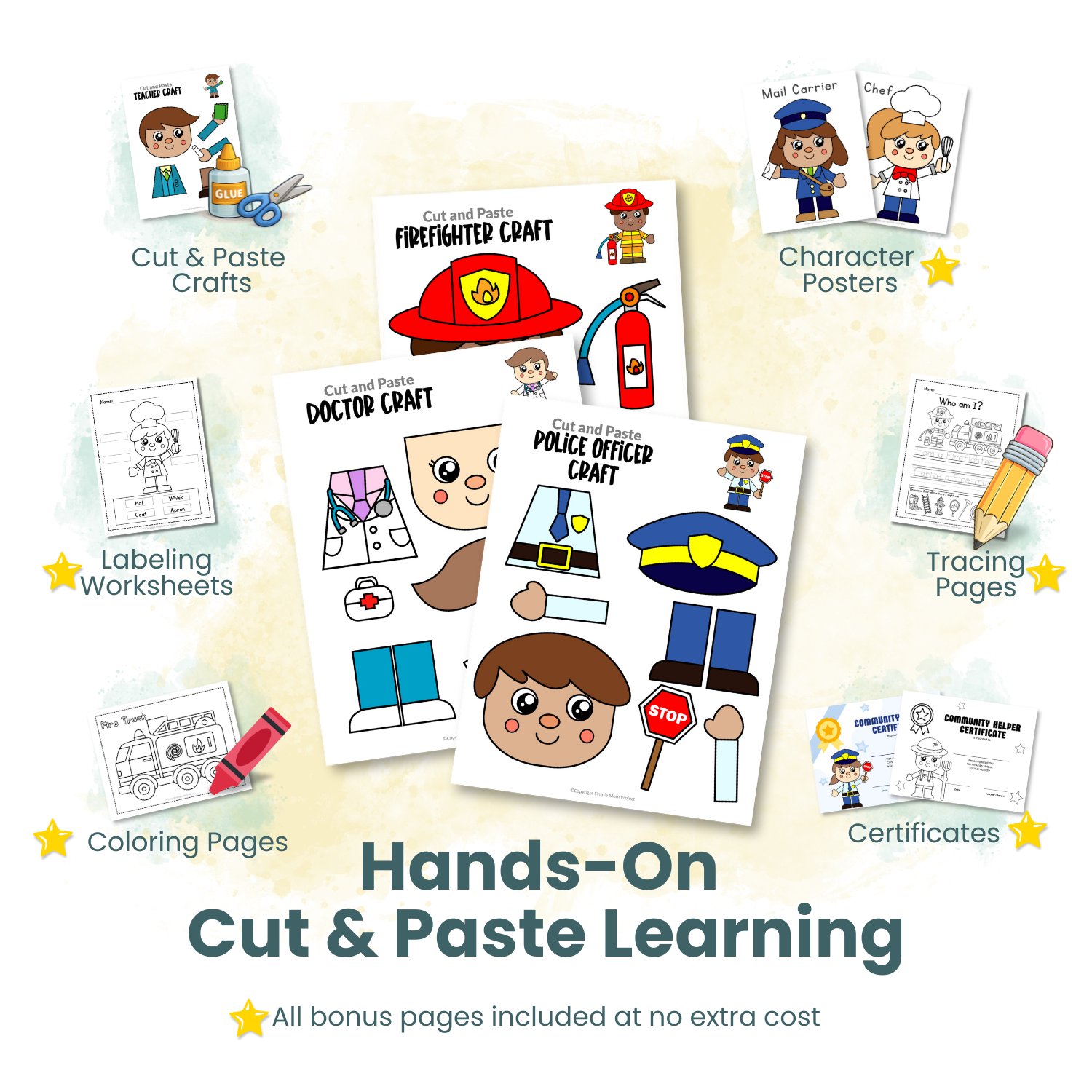
🎭 3. Use Community Helper Puppets for Pretend Play
Preschoolers learn so much through pretend play!
After learning about different community helpers, give children printable puppets and let them create their own community.
They might pretend to be a veterinarian helping an animal, a firefighter responding to an emergency, or a teacher helping students learn.
You can also use the puppets during circle time.
Hold up a puppet and ask:
“Who am I?”
“What is my job?”
“Where do I work?”
“What tools might I need?”
Once children become familiar with the helpers, let them take turns choosing a puppet and answering the questions themselves.
🧰 4. Match Community Helpers to Their Tools
Help preschoolers learn what different community helpers use while they work.
Gather pictures or toy versions of common tools such as:
- Stethoscope
- Fire hose
- Mail bag
- Hammer
- Toothbrush
- Chef’s spoon
- Police badge
- Veterinarian supplies
Ask children to match each item with the community helper who might use it.
You can make the activity more challenging by asking children to explain why that person needs the tool.
For example:
“A doctor uses a stethoscope to listen to your heart.”
“A construction worker uses a hammer to build things.”
This is a simple way to build vocabulary and encourage early reasoning skills.
🏥 5. Set Up Community Helper Dramatic Play
Turn part of your classroom or play area into a community helper station.
You don’t need a lot of supplies. Use toys and everyday materials you already have.
Try setting up a:
- Doctor’s office
- Veterinary clinic
- Post office
- Fire station
- Restaurant
- Construction site
- Classroom
- Grocery store
Add printable community helper characters, signs, paper, envelopes, toy tools, dress-up clothes, or other simple props.
Then let children decide who they want to be.
Dramatic play helps preschoolers understand what community helpers actually do instead of simply memorizing their job titles.
📚 6. Read Books About Community Helpers
Add community helper books to your reading time throughout the week.
Look for books featuring different occupations and encourage children to notice details in the illustrations.
After reading, ask simple comprehension questions such as:
“Who was the community helper in this story?”
“How did they help someone?”
“What tools did they use?”
“Would you like to do this job?”
You can also place several community helper books in your classroom library for children to explore independently.
🚓 7. Play “Who Am I?”
Give children clues and have them guess the community helper.
For example:
“I wear special gear.”
“I ride in a big red truck.”
“I help put out fires.”
Who am I?
A firefighter!
Or:
“I take care of animals.”
“I help animals when they are sick.”
“I might work at an animal hospital.”
Who am I?
A veterinarian!
Once children understand the game, encourage them to come up with their own clues.
This activity is especially useful for building listening, vocabulary, memory, and critical-thinking skills.
📬 8. Create a Preschool Post Office
A mail carrier lesson is the perfect excuse to create a mini post office.
Give children paper and crayons and let them make pictures or simple letters for their classmates.
Add envelopes if you have them and write each child’s name on the front.
Create classroom “mailboxes” using paper bags, folders, or small containers.
Then choose someone to be the mail carrier and deliver each piece of mail.
It’s a fun community helper activity that also introduces preschoolers to names, letters, writing, and how mail moves from one person to another.
🩺 9. Create a Pretend Doctor or Veterinarian Office
Set up a simple examination area using stuffed animals or dolls.
Children can pretend to:
- Check a heartbeat
- Apply a bandage
- Take a temperature
- Examine an animal
- Schedule an appointment
- Help a patient feel better
Talk about how doctors, nurses, and veterinarians help keep people and animals healthy.
This is also a great opportunity to introduce words such as patient, appointment, examine, healthy, veterinarian, nurse, and doctor.
🚧 10. Build Like a Construction Worker
Add a little STEM learning to your community helpers theme!
Give children blocks, building bricks, cardboard boxes, craft sticks, or other building materials.
Challenge them to build something their community needs.
They could create a:
- House
- School
- Hospital
- Fire station
- Bridge
- Road
- Store
Before building, ask children to think about what they want to make.
Afterward, let them explain what they built and why their community needs it.
🗺️ 11. Build a Classroom Community
After learning about several helpers, work together to create an entire pretend community.
Ask children:
“What places does our community need?”
You might include a school, fire station, police station, hospital, post office, veterinary clinic, grocery store, or construction site.
Children can draw buildings, make community helper crafts, and place their finished characters around the community.
This makes a wonderful end-of-unit project because children get to see how all of the different jobs connect.
💬 12. Talk About How Community Helpers Help Us
One of the most important parts of a community helpers lesson is helping preschoolers understand why these jobs matter.
Instead of focusing only on identifying occupations, talk about the problems each person helps solve.
For example:
Firefighter: Helps keep people safe during fires and emergencies.
Mail carrier: Brings letters and packages to homes and businesses.
Veterinarian: Helps sick or injured animals.
Teacher: Helps children learn.
Construction worker: Helps build and repair places we use.
This helps children understand that a community is made up of people working together.
🗓️ Simple Community Helpers Preschool Lesson Plan
If you want to turn these ideas into a full week, try this simple schedule:
Monday – Firefighters
Talk about fire safety, make a firefighter craft, and pretend to respond to an emergency.
Tuesday – Police Officers
Discuss how police officers help keep communities safe, make a police officer craft, and play “Who Am I?”
Wednesday – Doctors, Nurses & Veterinarians
Set up a pretend clinic, examine stuffed animals, and practice matching medical tools to their helpers.
Thursday – Construction Workers
Learn about construction tools and challenge children to build a school, bridge, or house.
Friday – Mail Carriers & Our Community
Create a classroom post office, deliver letters, and finish the week by building a classroom community together.
You can easily swap these helpers for the occupations you’re already covering in your classroom.
🧠 What Do Preschoolers Learn From a Community Helpers Theme?
A community helpers preschool theme can support several early learning skills at the same time.
Children can practice:
- Community awareness
- Vocabulary development
- Fine motor skills
- Cutting and gluing
- Listening comprehension
- Problem-solving
- Matching and sorting
- Early writing
- Social-emotional skills
- Imaginative play
Most importantly, children begin to understand that communities are filled with different people who have different responsibilities—and that those people work together to help others.
⭐ Make Your Community Helpers Unit Easy
A community helpers theme doesn’t need complicated activities or hours of preparation.
Choose a few helpers, introduce what they do, add a hands-on activity, and give children plenty of opportunities to talk and pretend.
With printable crafts, templates, puppets, books, and dramatic play, you can turn one simple theme into an entire week of preschool learning.
Loved this craft? More printable fun in the shop:
Browse the full shop•Complete Alphabet Bundle — $24.97•Uppercase Alphabet Crafts — $14.97