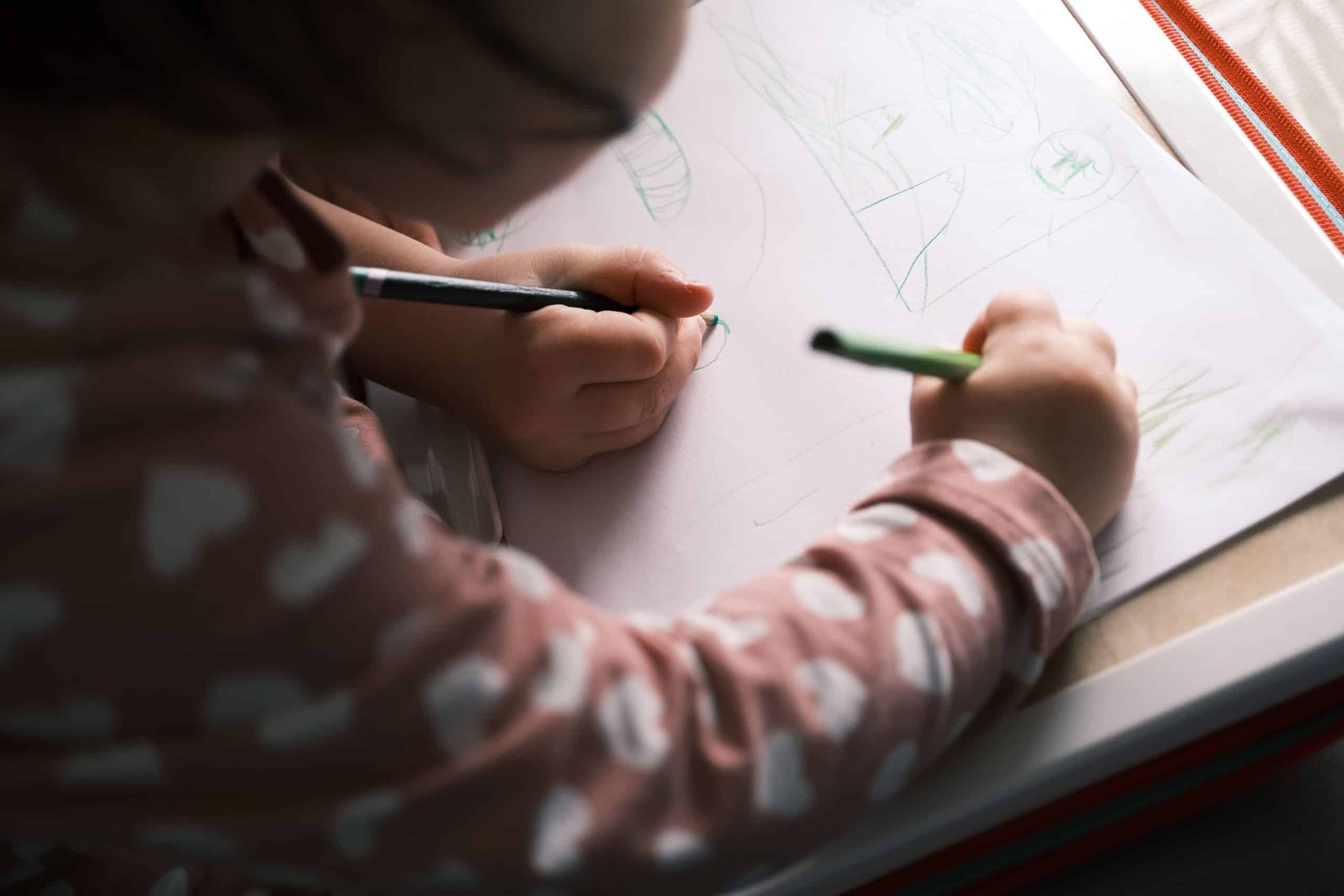
Mastering nine specific geometric shapes builds the exact hand muscles children need to form letters correctly later in life. Before young students can successfully trace the alphabet, their small hands must develop adequate grip strength and bilateral coordination. Pediatric occupational therapists note that skipping these foundational drawing steps often leads to sloppy handwriting and severe hand fatigue.
As of 2026, early childhood curriculums increasingly focus on sensory motor development rather than pushing premature letter tracing. Feeling overwhelmed by these modern approaches, some parents lack time for research and hire an online writing service to draft detailed homeschooling lesson plans for their toddlers. However, guiding your toddler through basic shape drawing requires no special curriculum, just consistent daily practice.
Focusing on these foundational shapes simplifies the approach to how to teach children to write by prioritizing physical muscle readiness over pure memorization. When you understand the biomechanics behind a simple circle or square, you can support your child’s educational journey effectively.
The developmental sequence of early shape tracing
Children master nine distinct geometric shapes in a universally predictable order to progressively build their intrinsic hand muscles. This specific sequence mirrors the gradual strengthening of the hand and the maturation of complex visual-motor integration. Recognizing these natural milestones prevents you from frustrating your child with tasks their hands simply cannot perform yet.
A two-year-old typically starts by imitating a vertical line, which requires only a basic gross motor drop of the arm. By age five, they develop the precise finger manipulation required to intersect diagonal lines for an advanced triangle. Pushing a child to draw a square before they master a circle interrupts this natural neurological progression.
Standard occupational therapy timeline for shape drawing milestones
| Geometric shape | Average developmental age | Primary biomechanical action |
| Vertical line | 2 years | Downward shoulder extension |
| Horizontal line | 2.5 years | Lateral elbow pivot |
| Circle | 3 years | Continuous wrist rotation |
| Cross shape | 3.5 years | Midline crossing coordination |
| Square | 4 years | Controlled directional stops |
| Right/Left diagonals | 4.5 years | Complex spatial angling |
| Intersecting X | 5 years | Advanced visual targeting |
| Triangle | 5+ years | Multi-directional pathing |
Source note: Data adapted from the Peabody Developmental Motor Scales.
Why hand anatomy determines long-term academic success
Developing the thirty-four individual muscles in the hand and forearm determines a student’s ability to grip a pencil painlessly. Without sufficient muscle endurance, a child will inevitably adapt poor grip postures to compensate for their underlying physical weakness. These bad habits cause severe joint pain and drastically reduce writing speed as they progress into higher grade levels.
Holding a pencil efficiently requires the thumb, index, and middle fingers to work independently from the ring and pinky fingers. This separation of the hand into two distinct functional sides takes years of deliberate play and practice to fully mature. Improving these muscles ensures that child writing remains a tool for communication rather than a source of physical stress.
Moving from erratic scribbling to controlled line work
Transitioning from chaotic, shoulder-driven scribbles to precise, finger-driven strokes requires stabilizing the wrist against a flat tabletop. When infants first grab crayons, they use their entire arm to drag color across the paper in wide, uncontrolled arcs. Providing small, broken crayons naturally forces their hands into a more mature, tighter grasp that encourages vital wrist stabilization.
Practicing structured shapes channels that raw energy into deliberate, planned movements that train the brain to estimate spatial boundaries. This cognitive shift from process-oriented scribbling to product-oriented drawing represents a critical evolutionary leap in teaching writing. You must celebrate these early, messy attempts as the vital physical workouts they truly are.
How pencil grasps mature as finger strength increases
A child’s pencil grasp naturally progresses through four distinct anatomical stages as their hand strength and neurological coordination improve. You should never force a dynamic tripod grip on a toddler whose physical anatomy still requires a primitive fist grip. Allowing these natural grip transitions ensures the intrinsic hand muscles develop at a safe, sustainable pace.
At around age four, you will notice the child shifting from moving their whole arm to isolating their wrist and fingers. This micro-movement capability is exactly what makes complex writing for kids possible when they finally enter kindergarten.
The four anatomical stages of childhood pencil grasp
| Grasp classification | Typical age range | Hand positioning |
| Palmar supinate | 1 to 2 years | Full fist grip with thumb wrapped at the top |
| Digital pronate | 2 to 3 years | Palm facing down with all fingers extended |
| Static tripod | 3 to 4.5 years | Three fingers pinching, whole wrist moves |
| Dynamic tripod | 4.5 to 6 years | Three fingers pinching, localized finger movement |
Source note: Standard grasp development charts from pediatric biomechanics research.
Sensory play tactics that rapidly strengthen the pinch muscles
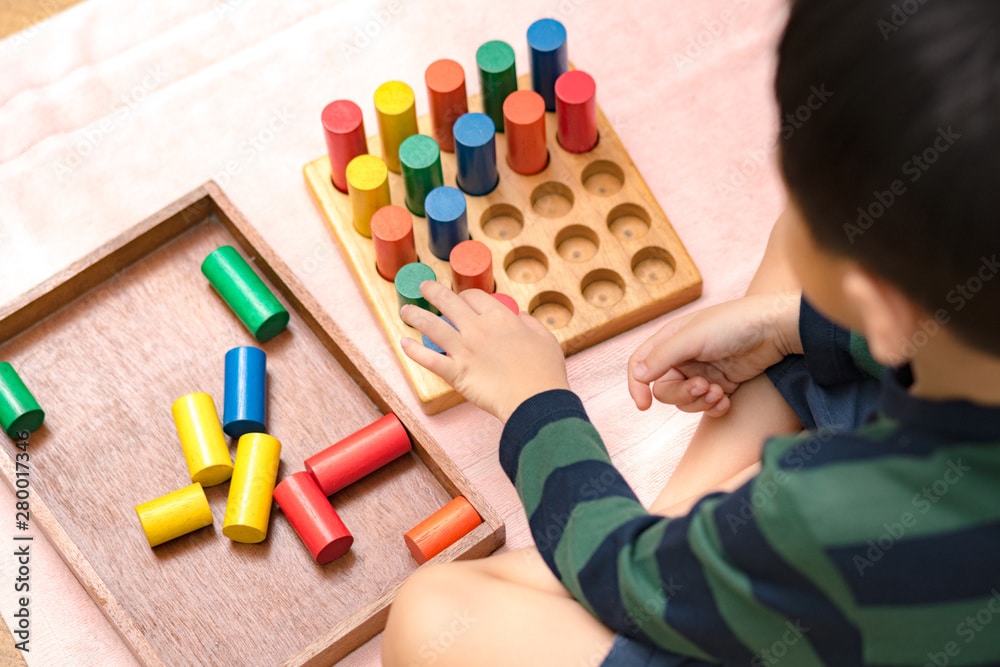
Manipulating resistive materials like therapy putty or modeling clay builds the specific web-space muscles (located between the thumb and pointer finger) needed to pinch a pencil correctly. Since kids writing demands immense stamina, strengthening the hands through heavy sensory work prevents painful cramping during long school assignments. You can easily integrate these muscle-building exercises into everyday playtime using standard, affordable household items.
Using spray bottles to water plants isolates the index finger and strengthens the exact muscles used for downward pencil strokes. Peeling small stickers from a backing sheet forces the thumb and pointer finger to practice a highly refined pincer grasp.
Printable cut-and-paste crafts are another easy way to add fine motor play to your child’s day.
Keep these simple household tools accessible to encourage spontaneous daily fine motor play:
- Plastic tweezers
- Spring clothespins
- Empty spray bottles
- Rubber eye droppers
- Dense play dough
Effective strategies for teaching vertical and horizontal lines
Demonstrating straight lines through top-to-bottom and left-to-right motions establishes the directional habits required for English literacy. You must teach children to pull the crayon downward rather than pushing it upward to mimic proper alphabetical letter formation. Understanding how to teach kids to write starts heavily with these two foundational strokes that construct letters like E, F, L, and T.
Start by having the child trace lines in sand or finger paint before introducing a hard pencil. This tactile feedback sends stronger neurological signals to the brain, helping the child internalize the specific movement pattern faster.
Follow these visual steps to teach straight down-strokes effectively:
- Draw a prominent green starting dot at the top of a page.
- Place a red target sticker directly at the bottom edge.
- Instruct the child to carefully pull the crayon down to connect them.
Mastering circles and intersecting crosses for basic letters
Drawing a perfect closed circle requires the wrist to rotate fluidly while the fingers maintain consistent, controlled downward pressure. This complex maneuver trains the small hand muscles for almost every vowel and curved consonant they will eventually learn to spell. If you are researching how to teach a kid to write, focusing heavily on counter-clockwise circle formation actively prevents future letter reversals.
When children learn to cross a vertical line with a horizontal one, they cross the invisible visual midline of their body. This crossing-the-midline milestone proves that the left and right hemispheres of their brain are communicating and coordinating effectively. Practicing these crosses directly prepares them for lowercase letter formations.
Developing diagonal muscle memory for angular alphabets
Drawing diagonal lines challenges a child’s spatial awareness because the hand must move both downward and sideways simultaneously. Letters like K, M, N, V, W, X, Y, and Z completely rely on this advanced, angular motor control. Understanding how to teach writing means acknowledging that diagonals are neurologically much harder for children than straight lines or basic curves.
To practice diagonals efficiently, tape a large piece of paper to a vertical wall rather than placing it on a flat table. Working on a vertical surface forces the wrist into proper extension and naturally strengthens the surrounding shoulder girdle.
Alphabet letters categorized by their primary pre-writing strokes
| Foundational stroke type | Letters requiring this specific stroke motion |
| Straight vertical and horizontal | E, F, H, I, L, T, i, l, t |
| Continuous circular curves | C, O, Q, G, S, U, a, c, d, e, g, o, q, s, u |
| Complex diagonal slants | A, K, M, N, V, W, X, Y, Z, k, v, w, x, y, z |
| Combination curves and straights | B, D, J, P, R, b, f, h, j, m, n, p, r |
Source note: Stroke categorizations derived from early childhood literacy frameworks.
The hidden connection between active playground play and penmanship
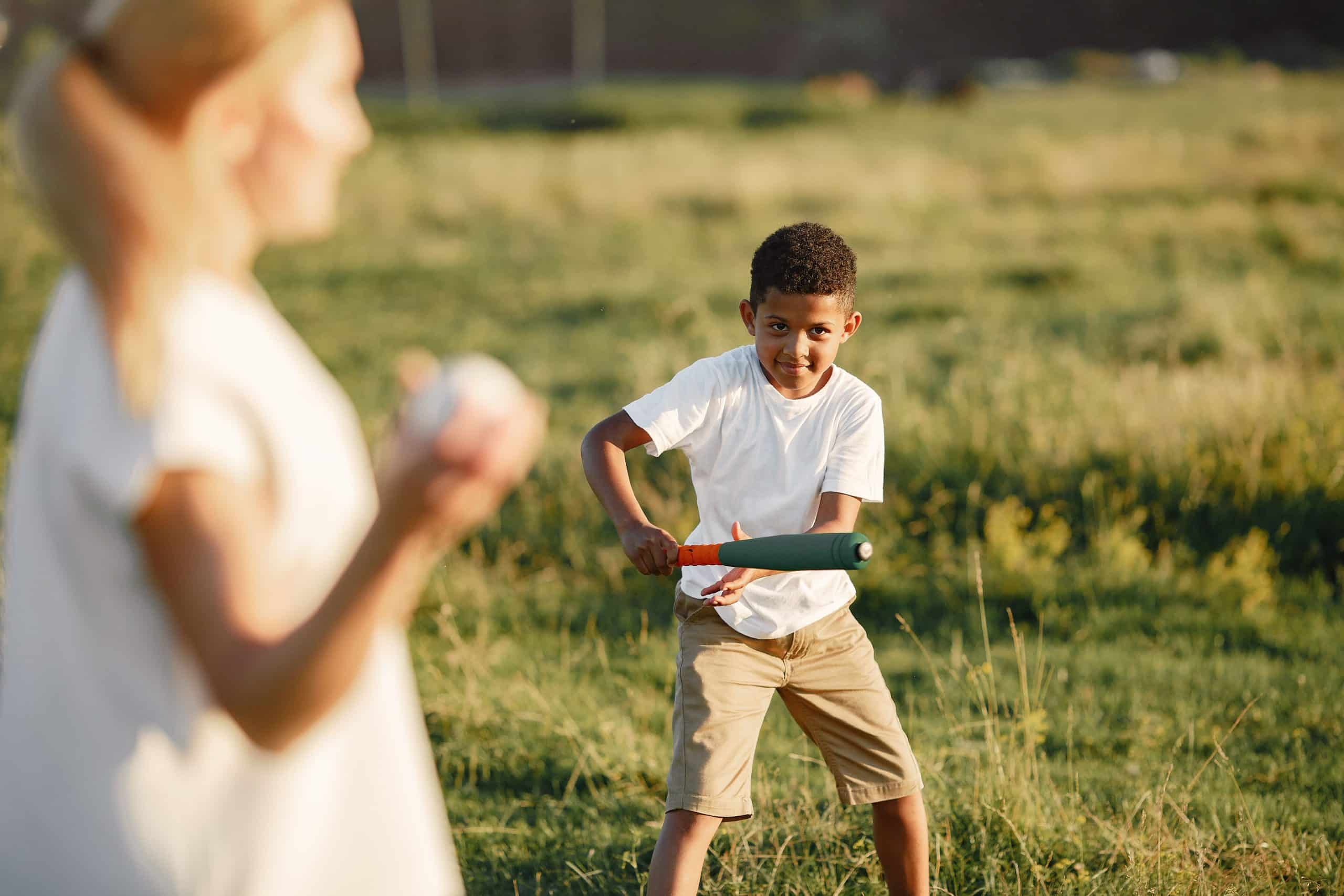
Core body strength and shoulder stability provide the physical anchor that allows the fingers to execute delicate drawing tasks. If a child cannot sit up straight and stabilize their trunk, their hands will constantly compensate just to maintain seated balance. Therefore, outdoor playground play directly improves kid writing by reinforcing the entire upper body kinetic chain.
Hanging from monkey bars builds immense gross grip strength and stretches the wrist joints into their optimal anatomical writing positions. Pushing heavy wheelbarrows or crawling through tunnels provides the deep proprioceptive feedback necessary for fine motor calibration. Before pushing desktop handwriting drills, you must ensure your child spends adequate time engaging in heavy physical play.
Why scissor cutting acts as the ultimate grip training
Opening and closing a pair of safety scissors mirrors the exact open-web thumb positioning required for a mature dynamic tripod pencil grip. Scissor activities isolate the thumb, index, and middle fingers while forcing the ring and pinky fingers to curl tightly for stability. This physical separation of the hand creates the isolated dexterity necessary to manipulate a pencil with pinpoint precision.
Cutting through thick materials like cardstock or play dough provides incredible resistance training for weak, developing hands. Start by having toddlers snip fringes on the edge of a paper plate before asking them to cut along a continuous line. Mastering scissor skills drastically accelerates learning how to write by building endurance that drawing alone cannot provide.
Identifying physical motor delays before kindergarten starts
Spotting weak hand muscles early allows you to implement simple occupational therapy interventions before bad habits become completely permanent. If a five-year-old still uses a whole-fist grip or cannot draw a basic square, their intrinsic muscles likely need targeted support. Teaching kids to write becomes a frustrating, tear-filled battle if underlying physical deficits go unaddressed.
Watch for extreme fatigue, tearing paper from pressing too hard, or avoiding tabletop coloring activities altogether. These behaviors often indicate deep physical discomfort rather than just simple defiance or a lack of creative interest.
Look out for these warning signs of a fine motor delay:
- Switching hands frequently during a single three-minute coloring task due to immediate muscle exhaustion.
- Holding the pencil with the thumb wrapped tightly over the index finger knuckle.
- Slumping the head heavily onto the table while attempting to draw simple shapes.
- Complete inability to copy a simple intersecting cross by their fourth birthday.
Selecting the proper adaptive writing tools for toddlers
Thick, triangular crayons force a child’s fingers into an ergonomic tripod grip by providing flat resting surfaces for the digits. Standard thin pencils easily slip through weak fingers, forcing the little child to squeeze too tightly and fatigue their forearm muscles. Providing the correct adaptive tools physically guides the hand into correct anatomical postures without needing constant verbal corrections.
Golf pencils are highly recommended for preschoolers because their short length prevents the child from resting the heavy barrel in the wrong web space. Using small pieces of chalk on a rough chalkboard also provides excellent friction, organically slowing down erratic, fast-paced strokes. Giving a child markers too early actually hinders muscle development because markers require zero downward pressure to leave a bright mark.
Integrating multi-sensory learning to cement shape memory
Combining auditory, tactile, and visual feedback helps children encode the muscle memory required for drawing shapes much faster than visual repetition alone. Calling out specific sounds or using rhythmic chants while drawing a shape gives the child a mental metronome for their hand movements. When designing activities for writing kids, you will quickly notice they learn best by physically interacting with the shapes through touch and movement.
Have your child build shapes out of pipe cleaners, wikki stix, or cooked spaghetti before asking them to draw it with a pencil. This physical manipulation builds a robust mental blueprint of the shape’s corners and curves in their brain. Walking along a large square taped to the living room floor translates the shape’s geometry into gross motor muscle memory.
How seated posture impacts fine motor endurance
Just as outdoor play builds vital trunk stability, creating an ergonomic workstation prevents a child’s core muscles from fatiguing before their hand muscles do. When a child’s feet dangle above the floor, their entire body becomes unstable, forcing their arms to hold their weight. This physical overcompensation locks the wrist in place, making fluid pencil strokes virtually impossible to execute properly.
Ensure your child sits at a table where their elbows rest comfortably at a strict ninety-degree angle. Placing a small stool under their feet grounds their posture, immediately freeing their hands to focus on delicate drawing movements. Adjusting the physical environment solves many perceived motor delays without requiring any specialized pediatric therapies.
Establishing a simple daily routine that builds endurance
Integrating ten minutes of dedicated fine motor play into their daily schedule yields better results than hour-long weekly tutoring sessions. Muscle endurance builds through consistent, short bursts of activity rather than prolonged, exhausting drills that cause painful hand cramps. Whether you are homeschooling in 2026 or supporting a traditional public school curriculum, absolute consistency remains the key to long-term kid’s writing success.
Keep a small, accessible basket of coloring pages, mazes, and connect-the-dots on the kitchen table to encourage spontaneous practice. Praise their effort and stroke direction rather than expecting perfectly straight lines or mathematically closed circles.
Implement these short activities into their daily routine to boost muscle stamina:
- Stringing large wooden beads onto thick shoelaces during morning breakfast hours.
- Sorting small coins into a piggy bank slot immediately after eating lunch.
- Kneading dense bread dough alongside you during evening dinner preparation.
- Tracing foundational shapes on a foggy bathroom mirror during nightly bath time.
Loved this craft? More printable fun in the shop:
Browse the full shop•Complete Alphabet Bundle — $24.97•Uppercase Alphabet Crafts — $14.97