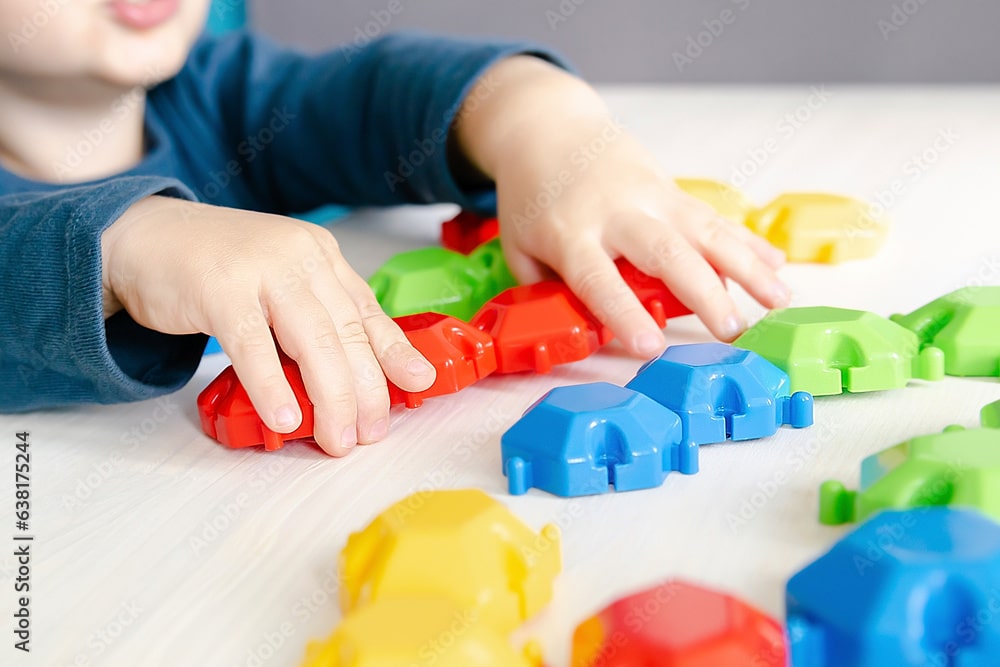
The fine motor skills will assist kids in buttoning their jackets, holding a spoon, turning pages, building things out of blocks, cutting paper, and even starting to write. It might seem to be a very small thing; however, scientific studies associate those abilities with such concepts as school preparedness, mathematics, literacy, attention, and independence.
There is no need to make your kitchen table an educational place. Dough, crayons, stickers, child-proof scissors, and various crafts for families will be enough for your child to practice.
This article was written using desk research carried out by Studyfy. The researchers used current systematic reviews, guidelines on child development, and studies on preschool education. The information collected proves that the issue is really significant – let’s find out why.
How to Understand the Research
It might be quite challenging to compare statistics on the issue of child development. Research may involve different periods of age, activities, family conditions and forms of school readiness.
Students who are engaged in educational, psychological and family development research might ask someone to do my Excel assignment in order to have extra time to systematize the study results, calculate percentages and to compare the definitions of fine motor skills used by researchers.
According to Daniel Walker, an expert involved in Studyfy’s research, parents should be careful about excessive claims. The correlation between two skills does not mean a direct influence, and group statistics are not always able to predict personal future results.
The main sources reviewed included the CDC’s five-year developmental milestones, a 2025 systematic review and meta-analysis, the Harvard Center on the Developing Child’s executive-function guide, the NAEYC fine motor guide for families, and a longitudinal study of preschool motor skills and later academic performance.
What Are Fine Motor Skills?
Fine motor skills involve the skilled actions that occur using the hands, fingers, and wrists.
Children use these actions in conjunction with their vision, attention, sense of touch, and body positioning. An activity such as cutting out a paper figure entails watching the line, stabilizing the paper, opening and closing the scissors, and turning directions.
Scientists frequently subdivide the abilities involved in fine motor skill development into several related categories.
Fine Motor Coordination
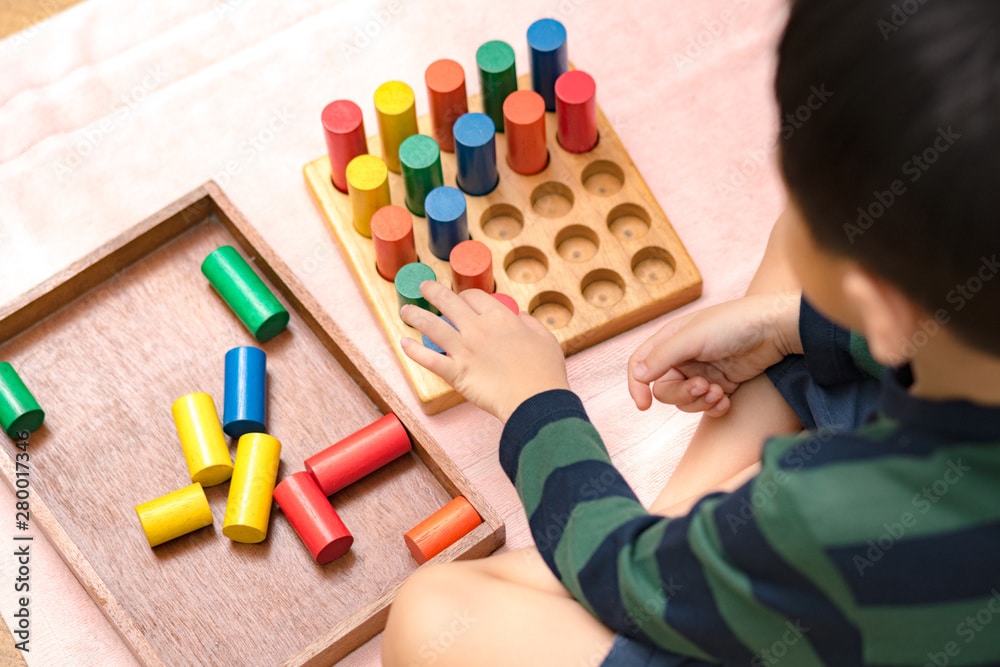
This term refers to controlled movements of the fingers and hands. An example is picking up a pom-pom using tongs or inserting a peg into a board.
Fine Motor Precision
Precision refers to performing a precise action. It may be as simple as placing a sticker within a circled area or putting a bead on a thread.
Visual-Motor Integration
Visual-motor integration enables your child to convert what they see into a hand movement.
Cross-copying, puzzle completion, road tracing, or block structure construction involves visual-motor integration, which is the link between the eyes and the hands.
Hand Strength and Dexterity
Hand strength enables your child to grip, squeeze, pull, twist and press.
The ability to perform different finger movements is referred to as dexterity. Rolling small playdough balls, opening containers or placing coins in the slot might help with the development of both skills.
Why They Matter in Kindergarten
Much of the kindergarten time is spent using hands.
Your child might have to open a lunchbox, hold a pencil, use the glue, sort counters, turn pages in the book, handle classroom equipment and clean up materials.
Sometimes scientists explain the importance of motor skills for learning in terms of the theory of automaticity. If physical activity becomes easier, then your child can concentrate more on planning, listening, following instructions or problem-solving.
Fine Motor Skills Help Promote Independence Too
Readiness for school is not only about being familiar with letters and numerals.
It is also good for your child to be able to cope with easy personal care. Doing up clothes, unpacking a snack, pouring drinks, and handling cutlery will not make going to school difficult.
The National Association for the Education of Young Children suggests engaging in household chores like table setting, food preparation, lid removal, dressing, drawing, playdough molding, construction of block towers, and puzzle solving.
What the Statistics Say
A 2025 meta-analysis started with 1,147 research articles and ended up with 11 articles meeting its final criteria.
The correlation between the overall fine motor skills and preschool math skills was 0.60. It can be regarded as a rather large positive correlation.
The correlation with reading was lower but still significant. The overall fine motor skills correlated with reading at the level of 0.35; visual-motor integration correlated with reading at the level of 0.37.
Of course, these statistics cannot prove that the development of fine motor skills ensures academic success. The correlation of 0.60 does not mean that fine motor skills cause 60% of math skills.
It means that stronger fine motor performance and stronger math performance often appeared together across the included studies.
Table 1. What important fine motor studies found
| Research source | Participants or evidence reviewed | Main result | What parents should take from it |
| 2025 systematic review and meta-analysis | 1,147 records screened; 11 studies included | Fine motor skills and math were correlated at 0.60; fine motor skills and reading at 0.35 | Hand-based play may support skills used during early learning, but the findings show an association rather than proof of cause |
| 2023 systematic review | 2,909 records screened; 18 studies included | Fine motor coordination and visual-motor integration were repeatedly linked with math; counting showed especially frequent links | Sorting, copying patterns, moving counters, and building may combine hand practice with early math |
| 2020 longitudinal study | 38 children followed from preschool into primary school | Fine motor measures explained about 19.6% to 27.4% of the variation in later academic results | Early hand control may provide useful information, but the sample was small |
| 2025 school-readiness study | 108 preschoolers with externalizing behavior concerns | Fine motor skills explained 46% of readiness variation before a program; fine motor skills and executive function explained 33% afterward | Motor and self-control skills may both matter, especially for children who need added support |
| CDC developmental guidance | Milestones are selected because at least 75% of children are expected to show them by the stated age | Five-year milestones include writing some letters, buttoning some buttons, and attending for 5–10 minutes during an activity | Milestones are monitoring tools, not an exam or diagnosis |
Crafts Should be Done when Children Have some Input into the Process
The final craft does not have to look like the one shown on the box.
NAEYC describes the difference between open-ended process art and projects in which all children are required to replicate an exact sample. In process art, children get to experiment, make decisions, and come up with something unique.
Painting, sculpting with clay, stringing beads, weaving, drawing, and collage involve fine motor control in children. They could also enhance planning, expression, comparing, and problem-solving.
You could present a general idea while still allowing children to have some choices. For instance, you could ask your child to make a garden out of paper, but leave it up to them what flowers to draw.
Fine Motor Development Should Not Lose Its Playful Touch
Fine motor development is linked with math, literacy, academic preparedness, self-care, and focus. However, it is learned through normal activities: sketching the whole family, kneading clay, preparing a meal, zipping up a jacket, or creating artwork.
It is possible to provide your child with the means, opportunity, motivation, and space to try things out. It is not necessary to correct every stroke or create the best craft.
Until entering kindergarten, the best fine motor training is always playful. Hands get stronger as they are occupied with creation and exploration!
Loved this craft? More printable fun in the shop:
Browse the full shop•Complete Alphabet Bundle — $24.97•Uppercase Alphabet Crafts — $14.97