While it may seem as though printable crafts are just a form of play, they offer young children valuable exercises in the use of their hands. Drawing, cutting out, folding paper and sticking pieces on require controlled actions that will prepare the children to perform daily actions such as writing, buttoning up, opening things and handling classroom equipment.
Fine motor skills refer to the small muscle groups in the hand, fingers and wrist. Preschoolers are in the process of learning how to coordinate their fine motor skills. The child may grip the crayon tightly, have difficulty in turning the scissors and placing a sticker in the correct place. Crafts offer a chance to do this – all while the child is having fun!
Printable Crafts Turn Studying into Fun
It is important for young kids to be engaged in actions to get information. In addition, they like touching things, moving objects, picking colors, and getting the immediate result. It is possible to say that printable crafts contribute to such a type of education since a kid makes an object that they can feel, hang somewhere, and use while playing.
Crafts could also be beneficial for students of early education who are studying subjects such as the development of a child through small activities. Research papers about preschool-age development usually take time for reading, observing, and comparison of various teaching techniques. It means that students who use MyPaperHelp for doing difficult homework may have more time for observing classes where kids are involved in crafts, preparing educational material, or analyzing the way children act while playing.
According to an education expert from a paper writing help service, MyPaperHelp, Sophia Bennett, it is necessary to observe carefully since the resulting picture is not everything.
Cutting Increases Hand Strength and Coordination
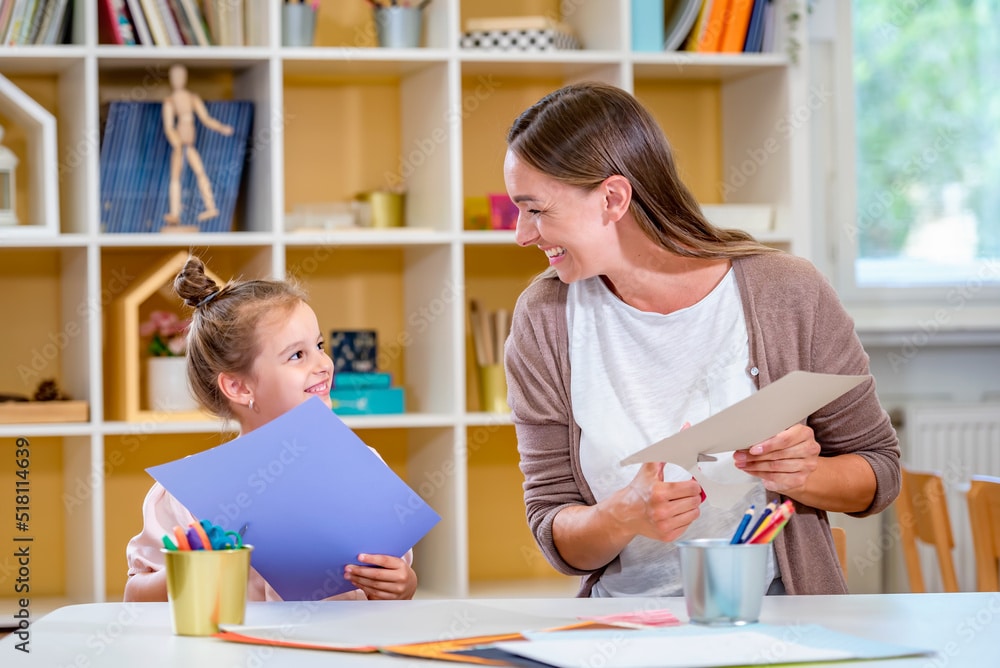
For using safe scissors, there are certain actions that have to be done simultaneously. A child needs to put their fingers properly, open and close scissors, hold the paper with one hand, and move the blades in the chosen direction.
Initially, a child would be able to make just some cuts along the edge of a paper sheet. Further on, they will be able to cut along a straight line, make turns, and cut a simple figure. All this makes hands stronger and more coordinated!
The use of printable cutting pages simplifies the process. Adults should start with short and thick lines, then go to curvy lines, zigzag, and figures. The result should not be perfect, but a gradual improvement.
Coloring Fosters Pencil Control Skills
Coloring allows children to practice the skills necessary for writing safely. The child learns how to grasp an object, apply appropriate pressure, move in various directions, and stop at the edge of a particular area.
Big printable images are most suitable for novice painters. Large spaces allow kids to make larger movements, starting from the shoulder and elbow. As the control increases, small spaces allow more movement to be made using the wrist and fingers.
There are some skills a child may develop by coloring:
- Using crayons, pencils, and markers appropriately
- Moving hands in various directions
- Applying appropriate pressure
- Using one hand to paint and another to hold the picture still
- Observing shapes, borders, and details
It is not necessary to tell children to stick to lines all the time. In case of constant correction, a pleasant activity can become a source of stress. It is better to note the improvements in skills, such as better pressure control and longer concentration periods.
Gluing and Placing Pieces Increases Accuracy
The process of sticking or attaching items such as eyes, ears, leaves, shapes, or decorations to a central image is involved in many printable craft activities. The picking up of these pieces requires finger work that is different from coloring or cutting.
It could require a child to use their thumb and index finger to pick up a small piece of paper. This technique is referred to as a pincer grasp. It is also used when one picks up small food pieces, buttons, and pencils.
The use of glue makes things difficult. One should be able to determine the amount and the area to apply the glue so that the piece is not either too dry or too wet. The ability to control a small task like this develops precision skills.
Using stickers can help with similar skill development. One needs good fingerwork to remove a sticker from its holder and put it on the designated spot.
Folding and Tracing Help in Developing Controlled Movements
Folding a piece of paper seems like a simple task for adults, but actually, it requires much attention. The person needs to align the edges and hold the paper still in order to crease it.
It is possible to begin with simple folding activities on a piece of paper. For example, a child can fold the arms of a character, a paper card, or tabs in order to fix an object. In addition, thick paper can be harder to fold and, therefore, ordinary paper is preferable at first.
Another helpful activity that helps to develop controlled movements is tracing. The child can trace different lines: straight lines, circles, waves, letters, or outlines of the picture. The activity involves eye-hand coordination.
Young children, especially preschoolers, need to trace wide paths first. Later on, they can try narrower paths. In any case, a child needs to have enough space for tracing.
Crafts Help Children Develop Skills for Everyday Activities
Besides being useful at the arts and crafts table, fine motor skills are required by children while eating, dressing, playing, cleaning up after themselves, or doing their class assignments.
According to Head Start resources on perceptual and motor development skills, fine motor skills help children grab and manipulate small objects and work with different tools like scissors and paintbrushes. Such skills promote better independence in learning and doing things.
The following skills may be developed with the help of printable crafts:
- Holding a spoon or a fork
- Turning the pages of a book
- Opening and closing lunch boxes
- Zipping zippers
- Playing with small building blocks
- Drawing simple shapes and letters
- Using class supplies correctly
The link between a particular craft and the skill is not always clear. Paperfish cutting can result in better control over class scissors. Taking stickers off can help with button fastening. Folding printable cards may improve bilateral hand coordination.
Conclusion
Coloring, cutting, gluing, and folding are among the many printable crafts that provide young preschoolers with the opportunity to develop fine motor skills while having fun and not spending too much money.
One must consider the level of skill of the child when choosing activities to do. It is important to have adult supervision, but at the same time, children should be allowed to choose and solve problems themselves. It’s all about creative balance!