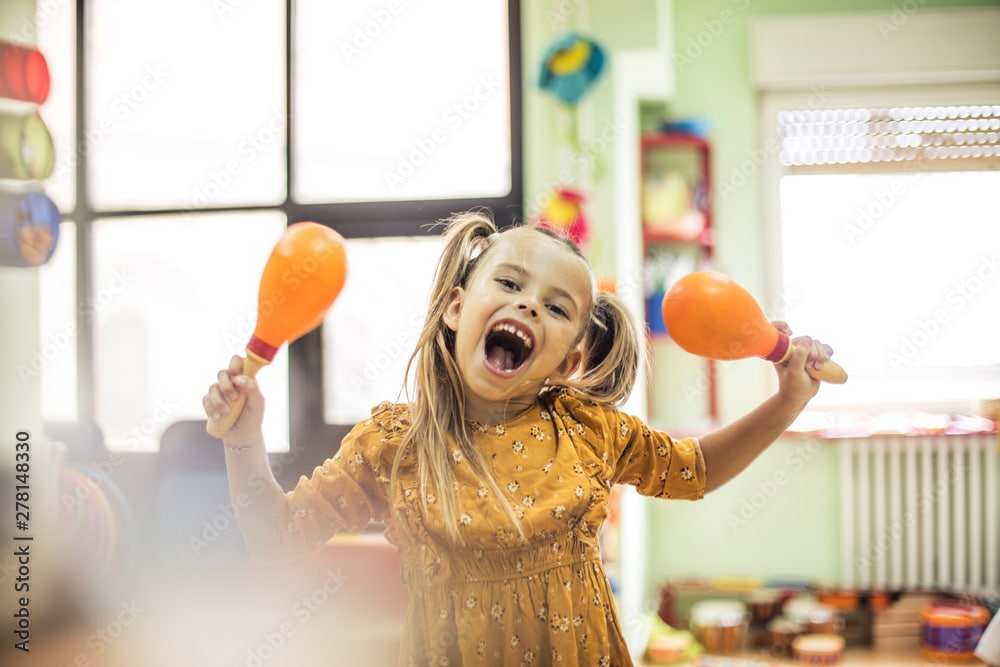
Young children are built to move! They want to jump off cushions, race across the room, spin in circles, crawl under tables, and turn almost anything into a game. Instead of fighting that energy, you can use it to help them learn letters, numbers, colors, shapes, sounds, memory, and simple problem-solving. The best part is that you do not need a shelf full of special learning toys to make it work!
Movement also makes learning feel much less like a lesson. A child who loses interest after five minutes with a worksheet may happily spend 20 minutes hopping between number cards or hunting for objects that begin with a certain sound. You can adjust each game to your child’s age and interests, which keeps things light rather than turning playtime into another class. The goal is simple: mix early learning into the kind of active play children already enjoy.
Table 1: Quick guide to movement-based learning games
|
Game |
What kids practice |
Movement involved |
What you need |
|
Alphabet animal walk |
Letters and sounds |
Crawling, hopping, stomping |
Paper letter cards |
|
Number hop |
Counting and number recognition |
Jumping |
Number cards |
|
Color and shape hunt |
Colors, shapes, observation |
Walking and running |
Household objects |
|
Freeze and count |
Counting and listening |
Dancing and jumping |
Music |
|
Sound stomp |
Beginning sounds |
Stomping and clapping |
Picture cards |
|
Pattern path |
Patterns and sequencing |
Stepping and balancing |
Paper shapes |
|
Treasure trail |
Problem-solving and directions |
Walking, crawling, searching |
Simple clues |
Why movement belongs in early learning
Movement gives children another way to explore an idea. They can hear the word “three,” see the number 3, and then make three big jumps, which connects the idea with something they can actually do. You do not have to explain the learning behind every game, either, because young children can pick up patterns through repetition and play. If they are smiling and asking to do it again, you already have something worth repeating.
Life can make it surprisingly hard to create these moments, especially if you are studying while caring for younger children or helping out at home. Problem: Your own classes, essays, and deadlines can take up the evening, leaving very little energy to set up activities or play together. Solution: If you are thinking, “I wish someone could write my essay for me,” WriteMyEssay can provide academic writing support while you protect some of your time for hands-on play and early learning. Result: You get a little more breathing room for the activities that need you there in person, whether that means counting jumps in the living room or turning the garden into a letter hunt.
Turn letters into an alphabet animal walk
An alphabet animal walk is one of the easiest games to set up because you can make it as short or as silly as you want! Put five or six letter cards around the room, then ask your child to travel toward each one like an animal whose name begins with that letter. They might hop like a rabbit to R, stomp like an elephant to E, slither like a snake to S, or crawl like a cat to C. You can help with the animal at first, then see whether they start suggesting their own ideas.
Do not worry if the connection between every animal and letter is not perfect on the first try. The game works because children hear the sound, see the letter, and connect it with a physical action. After a few rounds, ask them to name another word beginning with the same sound before they move to the next card. You can also let them choose the animal, which usually makes the game much funnier!
That active time has value on its own, too. The CDC recommends that children ages 3 to 5 stay physically active throughout the day and says adults should encourage active play with a variety of age-appropriate activities. That does not mean you need to schedule formal exercise sessions for preschoolers. It simply supports what many parents and teachers already see every day: movement, play, and learning fit together naturally.
Make number hop a regular favorite
Number hop turns counting into a game that children can feel with their whole bodies. Write numbers on sheets of paper and spread them across the floor, leaving enough space for safe jumping. Call out a number and have your child jump onto it, then ask for that many claps, hops, toe touches, or funny dance moves. Once the basic version becomes easy, you can start giving slightly harder clues.
For example, you might say, “Jump to the number after four,” or “Find the number that is smaller than seven.” You can also roll a die and ask the child to jump to the matching number. Another version is to let them call out the instructions while you do the jumping, which gives them a chance to lead the game. Children often become even more interested when they get to tell the adult what to do!
Make sure to be extra safe – jumping onto loose paper cards may cause slipping. Consider non-slip mats or securely taped cards as well.
Go on a color and shape hunt
Color hunts are great because you can play them almost anywhere. Ask your child to find something red, something round, something blue and soft, or something yellow that they can safely touch. The room, garden, supermarket aisle, or playground becomes part of the game without requiring any setup. You can make it more active by giving each search a different movement.
Here are a few easy ideas you can mix in:
-
Tiptoe while looking for something green.
-
Hop toward something shaped like a circle.
-
Walk like a giant while searching for something tiny.
-
Crawl carefully toward something blue.
-
Clap three times when you find a square.
-
Spin once before bringing back something yellow.
You do not need to correct every mistake right away. If your child points to an oval and calls it a circle, you can ask, “What looks the same?” before showing how the shapes are different. That keeps the activity curious rather than making the child feel tested. A game stays fun much longer when wrong answers are treated as part of learning instead of a problem.
Play freeze, move, and count
This game is perfect when you need something quick, as it requires almost no preparation. Put on a song your child likes and let everyone dance, jump, march, or wiggle until you pause the music. When it stops, call out a simple challenge such as, “Show me four fingers,” “Do three jumps,” or “Touch two things that are blue.” Start the music again before the game begins to feel slow.
You can change the questions depending on what your child is learning that week. If you are practicing shapes, ask them to make a triangle with their hands or stand beside something rectangular. If you are working on counting, have them do five knee bends or clap six times. If you are focusing on listening, give two instructions in order and see whether they can remember both.
Make letter sounds something children can move to
Sound games are another easy way to connect early reading with movement. Choose one beginning sound, then tell your child to stomp, jump, or clap whenever they hear a word that starts with it. If the sound is M, you could say “moon,” “cat,” “milk,” “tree,” and “mouse,” while the child moves only for the M words. You can speed up the game once they understand what to do.
Picture cards also work nicely if you have them, but you can use toys and objects around the house instead. Hold up a spoon, sock, ball, book, cup, or toy car and ask the child for the first sound. Then give each sound its own movement, such as stomping for S or bouncing for B. The sillier the movement, the easier it may be to remember.
Use simple obstacle courses for learning
A small obstacle course can turn your living room or garden into a learning path. You might place a cushion to jump over, a chair to crawl under, a line of tape to balance along, and a number card waiting at the end. At each point, add one tiny learning task, such as naming a color, counting to five, or choosing the picture that begins with a certain sound. The movement keeps the activity exciting while the questions give it a learning purpose.
Try not to make the course too complicated. Four or five steps are plenty for younger children, especially the first few times. Once they know the route, let them help design a new version and decide which questions should appear along the way. Giving them that control adds planning and problem-solving without making the activity feel harder.
Safety matters more than making the course impressive. Use soft objects, keep floors clear, and avoid anything that could tip, slide, or cause a fall. The idea is to give children a challenge they can enjoy, not to build a mini adventure park in your hallway. A few cushions and paper cards can do the job perfectly well!
Build a pattern path
Patterns can feel abstract when children first meet them, but movement makes them much easier to see. Create a simple sequence such as jump, clap, jump, clap, then ask your child what should come next. Once they get the idea, try hop, stomp, stomp, hop, stomp, stomp. You can also lay colored pieces of paper on the floor and have children step through a red-blue-red-blue pattern.
Start with only two actions before adding more. You can make the child the leader once the pattern becomes familiar, and copy whatever sequence they invent. This is great fun because children quickly discover that confusing the adult is part of the game. You may end up doing jump-spin-clap-stomp in the middle of the kitchen!
Patterns are useful because they encourage children to notice what repeats and predict what comes next. Those same skills appear later in numbers, music, reading, and everyday problem-solving. You do not have to explain that connection while you play. Just keep repeating, changing, and guessing together.
Create a movement treasure trail
A treasure trail adds a little mystery to early learning. Hide several simple clues around the room or garden, with each clue asking the child to move somewhere and solve one small task. One card might say, “Hop to the sofa and find the number 4,” while another asks them to crawl to the door and look for a red shape. At the end, the “treasure” can be a sticker, a snack, a favorite toy, or simply the chance to choose the next game.
Keep the clues short and mostly visual if the child cannot read yet. You can draw a picture of a chair, add three dots, and ask the child to jump three times when they reach it. Older children can follow simple written directions such as “Take five steps toward the kitchen.” The same game can grow with them instead of being useful for only one age.
This is also a nice activity for siblings or small groups. Let children take turns finding clues so one child does not race through the whole trail alone. If they start helping each other, that is not cheating. Working together is another useful thing they are learning.
Make movement part of normal family play
Movement-based learning works best when it stays playful. Give children room to be silly, change the rules, invent new movements, and sometimes turn the whole activity into something you never planned.
If everyone ends up laughing while practicing colors, counting, sounds, or memory, that is a pretty successful lesson!
Loved this craft? More printable fun in the shop:
Browse the full shop•Complete Alphabet Bundle — $24.97•Uppercase Alphabet Crafts — $14.97