This post is sponsored
Bringing a puppy into the family can be an exciting experience for parents and children alike. A new dog quickly becomes more than a pet—it can become a playmate, walking companion, and important part of everyday family life. However, raising a well-mannered dog requires patience, consistency, and involvement from everyone in the household.
Early training is one of the best ways to help a puppy understand what is expected of them. It can also make life easier for parents and children by establishing routines and reducing common behavioural problems. From learning basic commands to becoming comfortable around children, early guidance can help create a safer and more enjoyable environment for the entire family.
Start Training While Your Puppy Is Young
Puppies are naturally curious. They explore their surroundings by sniffing, chewing, jumping, and interacting with people. While these behaviours are normal, they can become difficult to manage if a puppy never learns appropriate boundaries.
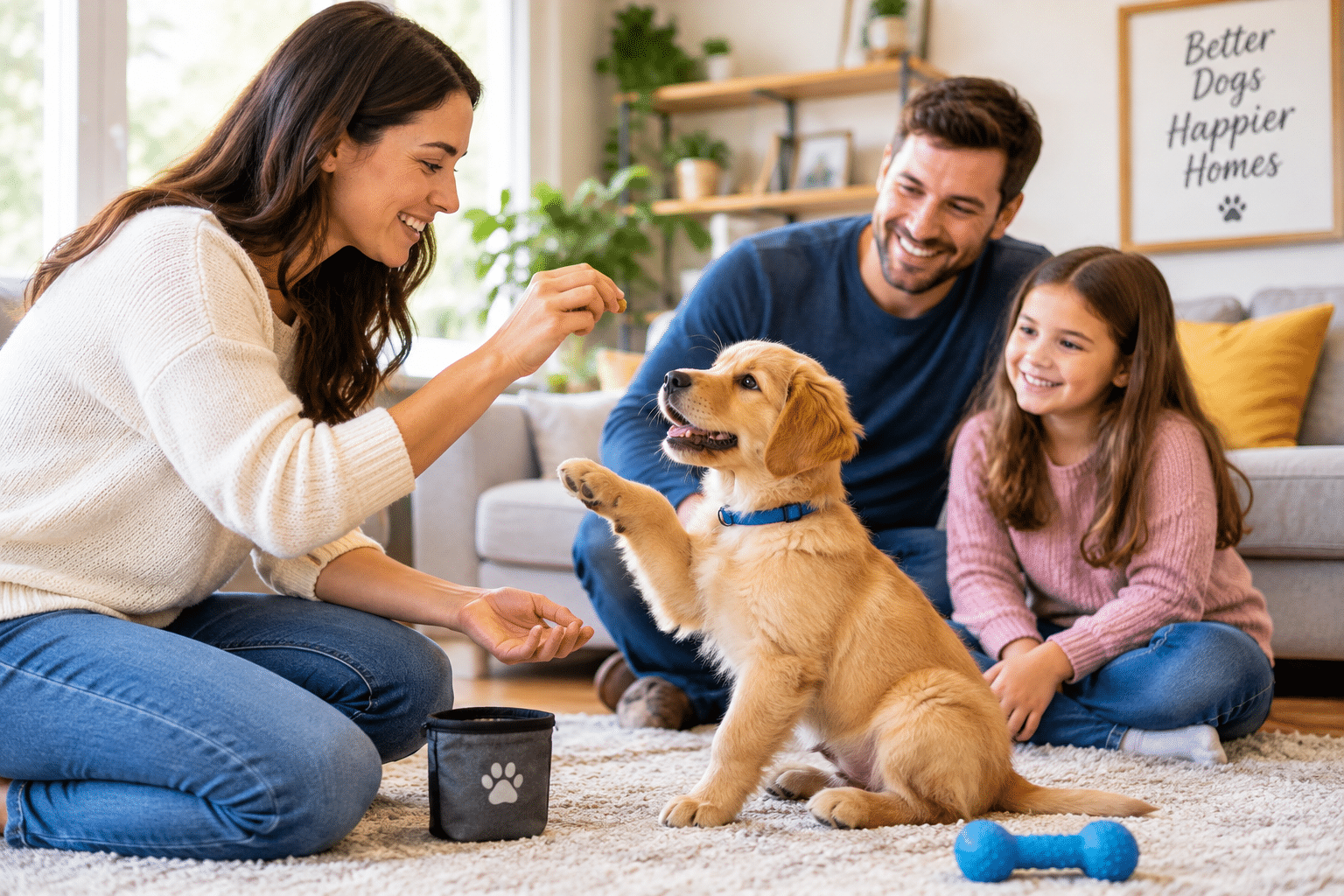
Early training allows families to establish those boundaries from the beginning. Simple commands such as “sit,” “stay,” “come,” and “leave it” can be useful in everyday life. Training sessions do not need to be long. A few minutes at a time can be enough for a young puppy, particularly when lessons are positive and consistent.
Parents can also involve older children in simple training exercises under supervision. This can teach children how to communicate calmly with animals while helping them develop patience and responsibility.
Teach Children How to Interact With the Family Dog
Training a puppy is only one part of creating a harmonious relationship between children and pets. Children also need to learn appropriate ways to interact with their new companion.
Parents can teach children not to pull a dog’s ears or tail, climb on the animal, disturb it while eating, or take away a toy without guidance. Younger children should always be supervised around dogs, even when the pet has a calm personality.
Families can create a special resting area where the dog can retreat when it wants quiet time. Teaching children to respect this space helps establish healthy boundaries and gives the pet a comfortable place to relax.
These simple lessons can turn pet ownership into a valuable learning experience for children. They begin to understand empathy, responsibility, patience, and respect for another living creature.
Establish Family Rules From the Beginning
Consistency is especially important when raising a puppy. If one family member allows the dog on the sofa while another constantly tells it to stay down, the puppy may become confused.
Before bringing a dog home, parents can discuss a few basic household rules with everyone. Decide where the dog will sleep, which rooms are accessible, where food will be given, and which behaviours are not acceptable.
Children can participate in age-appropriate responsibilities, such as helping refill a water bowl or putting toys away after supervised play. These small tasks can help them feel involved without placing the responsibility for the pet entirely on them.
Make Socialisation a Family Activity
A well-socialised dog is generally better prepared to handle new people, sounds, places, and experiences. Families can gradually and positively introduce puppies to different environments.
A short walk around the neighbourhood, a calm visit to a pet-friendly location, or meeting a friendly and vaccinated dog can become part of the puppy’s learning experience. Children can accompany their parents during these activities while learning how to behave calmly around unfamiliar animals.
Socialisation should always be appropriate for the puppy’s age, health, and vaccination status. Families should also avoid overwhelming a young dog with too many new experiences at once.
The goal is to help the puppy develop confidence while strengthening the relationship between the pet and the family.
Prevent Jumping, Nipping, and Other Common Problems
Puppies often jump up when greeting people or use their mouths while playing. Although these behaviours may seem harmless when a dog is small, they can become problematic as the animal grows.
Parents can establish a consistent response whenever the puppy jumps. Instead of rewarding the behaviour with attention, family members can wait for the puppy to settle and then provide praise.
Similarly, puppies can be redirected toward suitable chew toys when they nip hands, clothing, or household items. Everyone should respond consistently so the dog receives the same message from each member of the family.
Families looking for additional guidance can consider professional dog training to learn practical techniques for teaching appropriate behaviour. Professional support can be particularly useful when parents are unsure how to handle a persistent behavioural issue or want guidance on building a structured training routine.
Use Training to Create a Safer Home
Good training is not simply about having a dog that follows commands. It can also contribute to a safer household.
A reliable “leave it” command, for example, can help prevent a curious puppy from picking up something dangerous from the floor. Teaching a dog to wait at doors can reduce the risk of it suddenly running outside. Learning to come when called can also be valuable during walks and outdoor family activities.
These skills become particularly useful when children are playing nearby. While training should never replace adult supervision, a well-trained dog can be easier for parents to manage during busy family routines.
Turn Training Into Quality Family Time
One of the greatest benefits of training a family dog is that it can bring people together. Instead of treating training as a chore, families can turn it into a shared activity.
Parents can organise short practice sessions, while children can participate in simple games such as rewarding the dog for sitting or responding to its name. Outdoor training can also be combined with family walks and playtime.
Over time, these activities can strengthen the bond between the dog and its human family. Children get to watch their pet learn new skills, while parents can reinforce positive behaviour and establish routines.
Extend the Experience With Dog-Themed Activities
Bringing a puppy home can also inspire simple dog-themed activities that help children feel more involved in the experience. For example, parents can use a dog craft template for a quiet colouring or crafting activity while talking with children about how to care for their new pet.
This can be a fun way to reinforce lessons about feeding, gentle handling, personal space, and responsible pet ownership. Combining creative activities with everyday training and care can help children build a positive connection with the family dog while learning that looking after a pet involves patience, kindness, and teamwork.
Building a Positive Relationship From Day One
A puppy’s early experiences can influence how it behaves and interacts with the people around it. By combining consistent training, appropriate socialisation, clear household rules, and respectful interactions, families can give their new pet a strong foundation.
Most importantly, raising a dog should be viewed as a family journey. Children can learn valuable lessons about kindness and responsibility, parents can establish a safer home environment, and the dog can become a trusted companion.
With patience and positive guidance, early training can help transform the excitement of bringing home a puppy into a rewarding experience for the whole family.
Loved this craft? More printable fun in the shop:
Browse the full shop•Complete Alphabet Bundle — $24.97•Uppercase Alphabet Crafts — $14.97