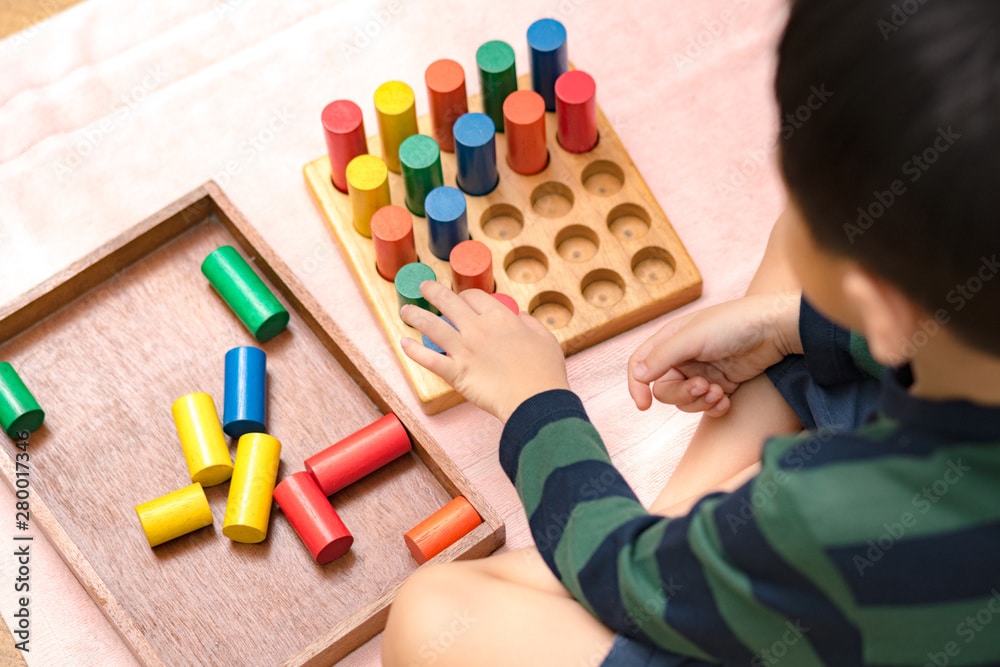
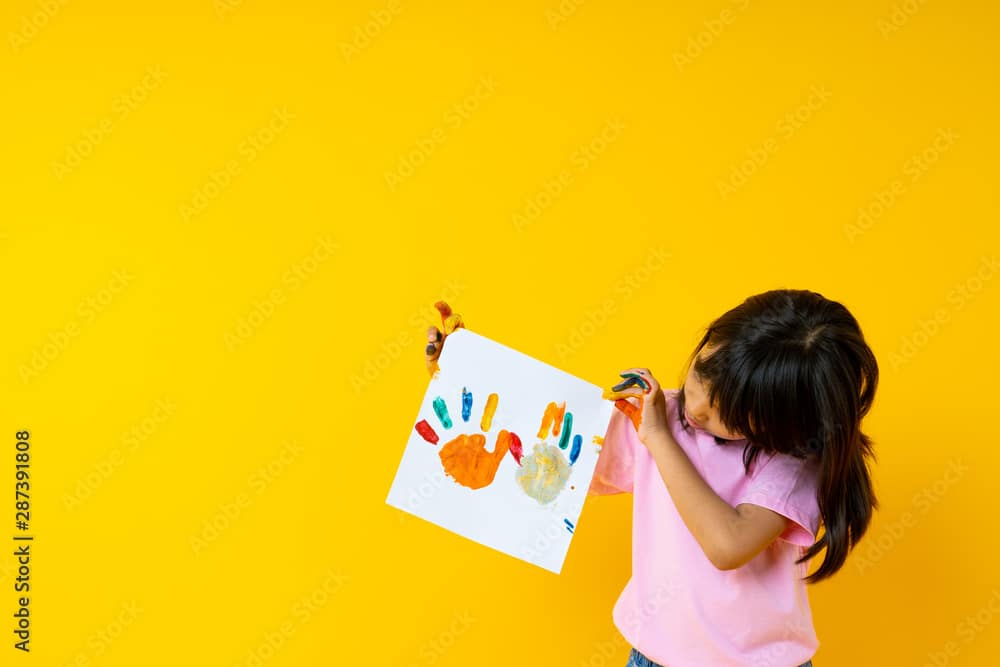
There is no need for lengthy lessons and many pages for young children to learn something new. Sometimes, they grasp such basic concepts such as colors, shapes, and numbers better through touching, organizing, and creating things. Such a process is made possible by a simple paper craft.
Crafts enable children to learn at their own pace. While one child can instantly identify a red circle, another might require holding it, comparing it with other shapes, and hearing its name multiple times. Both kids can engage in the same activity without the feeling of being tested.
How Does Doing Crafts Help Preschoolers Learn Faster?
Young children learn via actions. Cutting a triangle, picking a blue crayon, or pasting three buttons on a paper coat allows kids to associate the name of each object or process with something real and tangible. This helps remember the idea more easily.
Also, doing crafts might be helpful for those who want to become teachers of young children. Pre-service educators should create sample lesson plans, observe children, evaluate various approaches, etc. At the same time, they have to complete their essays and other academic assignments. The assistance provided by Do my project for me services will allow them to allocate extra time to think about interesting preschool activities and observe the way young children behave while completing these tasks.
According to Annie Lambert, an educational specialist cooperating with an essay writing service, EssayPro, it is crucial for adults to concentrate on the way a kid makes certain decisions and thinks. Sorting papers by color, counting various decorations, and explaining the difference between the shapes is a good exercise to start with.
Begin with Color Sorting Crafts
The topic of colors can be used for preschoolers since colors are always around us. Kids observe different colors of clothing, toys, fruits, books, flowers, road signs, etc.
One example is a rainbow collage in which adults can prepare several big areas on a sheet of paper, labeling each of them by color. Kids need to sort out different materials (scrap paper, yarn, stickers or cuttings from magazines) and place them in appropriate places.
In order to help children with this activity, an adult can ask some simple questions:
- What is the red one?
- Can you find yellow things?
- Are these two pieces the same color?
- What color do you want to use now?
- Can you find the light/dark blue?
The questions should be asked in a manner of dialogue, not in the form of a test. In case the child answers wrongly, the adult may just compare the pieces and say the correct name again.
Children could also try making paper color monsters where each monster has a particular color, and then a child creates a green monster with green eyes, green spots and green paper hair. Older children could make mixed color monsters and name all the colors that they used.
Build a Picture from Basic Shapes
Shape craft activities would help kids recognize shape sides, angles, size, position and curves. In place of memorization of names of shapes from flashcards, kids could make pictures out of them.
Here is an example of making a paper house out of:
- One large square for a building
- One triangle for a roof
- Two small squares for windows
- One rectangle for a door
- Some circles for flowers or decorations
Kids could move pieces around before attaching them together and practice with words like above, below, beside, inside and underneath.
This same principle applies to shape animals. Circles may become the parts of a caterpillar, triangles become the fins of a fish, and rectangles become the legs of a dog. Children will quickly learn that a particular shape can be used in various images.
According to the official Head Start Preschool Mathematics Guide, early mathematics entails the identification, description, comparison, and combination of shapes. The guide stresses the need for playing and learning through firsthand experience.
Counting into Any Craft
Learning numbers is much more productive when children learn number names together with actual numbers. Speaking the number “five” is one thing. Understanding that five buttons, five stars, and five paper circles all mean the same number is another level of skill.
Making a counting caterpillar will serve as an ideal start. Provide the child with a paper head and instruct them to create a particular number of circles representing the body. An inexperienced child can make the body out of three circles. For experienced ones, the body may consist of eight or ten circles.
There are many simple crafts that can be used to develop children’s counting abilities:
- Attaching four windows to the paper bus
- Gluing five apples to the tree
- Adding six dots to the ladybug
- Drawing three balloons above the figure
- Placing seven stars in the night sky
- Creating the crown decorated with a selected number of jewels
A digit may be written next to the completed group.
Combining Colors, Shapes, and Numbers
After becoming confident in their separate skills, the child can be offered one craft activity, incorporating all of these concepts into one process.
A garden made from paper would be a perfect idea for this purpose. The kid will have to create two red circular flowers, three yellow triangular flowers, and four blue squared flowers. The child will need to recognize colors, determine shapes, and count a proper number of elements.
Another idea could be making a paper train. Each carriage could have different shapes, numbers, and colors. You could say, “Put two green circles in the first carriage,” or “Add three red triangles to the second one.”
Wrapping Up
Simple crafts help preschoolers get a better understanding of colors, shapes, and numbers. The preschoolers can sort materials, construct images, count objects, make patterns, and explain their decisions, and at the same time build their hand muscles.
No sophisticated or costly materials are needed. Just a couple of cutouts from paper and an aim to achieve give you a useful educational game. The questions, appreciation, and guidance of an adult will make children realize what they are doing.
Even if the final product looks messy and even completely unlike the sample, it does not matter. Any color chosen, any shape moved, and any object counted becomes one more learning experience for the preschooler!