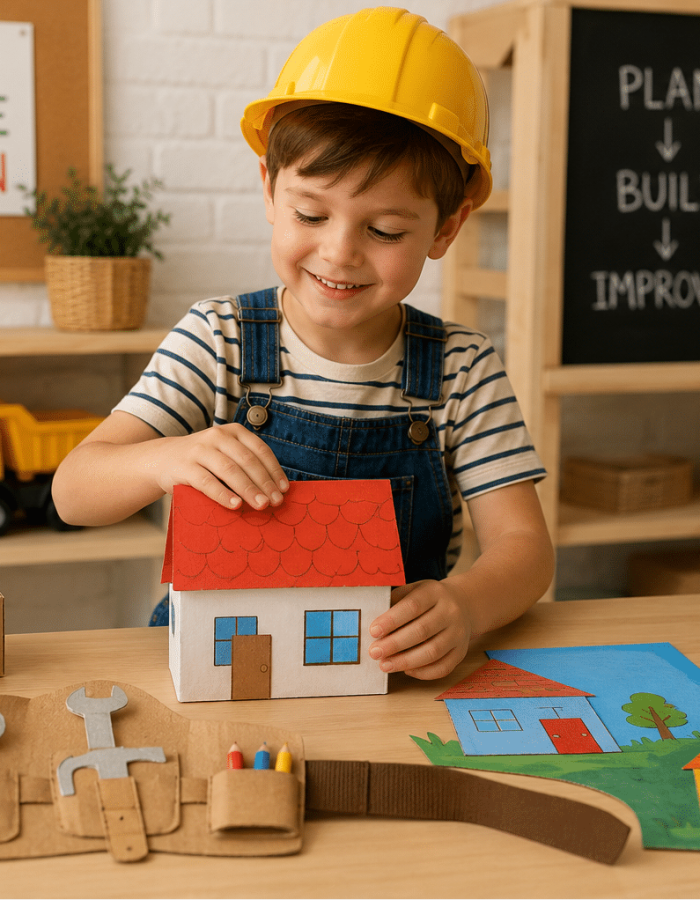
Kids love to build, cut, glue, color, and pretend. That is why simple hands-on projects are such a great way to help them learn. A paper house, cardboard tool belt, construction worker craft, or pretend home design activity can teach children about shapes, colors, problem-solving, and the people who help build our communities.
Home projects can also be a fun way to connect real life with learning. When children see parents painting a room, planting flowers, fixing a fence, or planning a small upgrade, they often become curious. They ask what tools are used, why materials matter, and how different jobs help make a home safer and more comfortable. For bigger real-life home improvements, families may work with trusted professionals such as US Quality Construction. But for kids, the best place to start is with simple, safe, creative activities that help them understand how homes are built and cared for.
1. Make a Paper House Craft
A paper house craft is easy to prepare and works well for preschool, kindergarten, and early elementary children. Parents or teachers can draw a simple house shape, then let kids cut, color, and decorate it.
Children can add windows, doors, flowers, clouds, pets, or family members. This helps them practice fine motor skills while learning the basic parts of a home.
You can also turn it into a lesson by asking simple questions:
What color should the roof be?
Where should the door go?
How many windows does the house need?
What makes a home feel safe and happy?
This keeps the activity playful while building early thinking skills.
2. Create a Construction Worker Craft
Community helper crafts are a great way to teach kids about real-world jobs. A construction worker craft can help children understand that homes, schools, roads, and playgrounds are built by skilled people.
Kids can make a paper construction hat, tool belt, or worker puppet. They can color tools like a hammer, ruler, paintbrush, drill, or safety vest. This is also a good time to talk about safety, teamwork, and why adults use special equipment.
After the craft is finished, children can use it for pretend play. They might pretend to build a house, fix a wall, or help a family improve their home.
3. Design a Dream Room
A dream room activity is perfect for kids who enjoy coloring and imagination. Give each child a blank room outline and let them design their own space.
They can draw a bed, rug, toy shelf, desk, lamp, books, or wall art. Older children can also cut pictures from magazines and glue them into the room.
This activity teaches planning and decision-making. It also helps kids think about how a space can be both useful and beautiful.
Parents can make it even more fun by asking children to explain their design. Why did they choose that color? Where will they keep their toys? What makes the room special?
4. Build With Recycled Materials
You do not need fancy supplies for a good building activity. Empty boxes, paper rolls, bottle caps, fabric scraps, and cardboard pieces can become houses, towers, stores, garages, or playgrounds.
This type of project helps children learn creativity and problem-solving. If the tower falls, they can try again. If the cardboard house needs a stronger roof, they can test a new idea.
It is also a simple way to teach kids about reusing materials instead of throwing everything away.
5. Talk About Real Home Helpers
After the craft, connect the activity to real life. Talk about painters, builders, roofers, plumbers, electricians, landscapers, and remodelers. Explain that each person has a different job and helps make homes safer, cleaner, and more comfortable. If parents are planning a home project and want to learn about different services, Remodeling Nation can be a helpful place to explore remodeling topics and contractor options.
Simple home-themed crafts are more than just fun activities. They help kids build fine motor skills, learn new words, understand community helpers, and use their imagination.
With paper, crayons, glue, and a little creativity, children can learn how homes are made, how people work together, and how small ideas can turn into something special.
Loved this craft? More printable fun in the shop:
Browse the full shop•Complete Alphabet Bundle — $24.97•Uppercase Alphabet Crafts — $14.97